The AI Dog Fraud: Inside the Galgotia University Controversy at the India AI Impact Summit
In the high-stakes world of robotics and artificial intelligence, the line between indigenous innovation and white-labeling is often blurred by institutional ambition. The India AI Impact Summit 2026 was meant to be a crowning moment for Indian academic research, showcasing the nation's progress in building complex hardware. Instead, it became the epicenter of a scandal involving Galgotia University and a robotic "AI Dog" that was ultimately revealed to be a commercial Chinese product. This investigation explores how the deception unfolded, the global precedents for tech fraud, and why this is a wake-up call for the Make in India initiative.
The Anatomy of the Deception: Bharat Mandapam, 2026
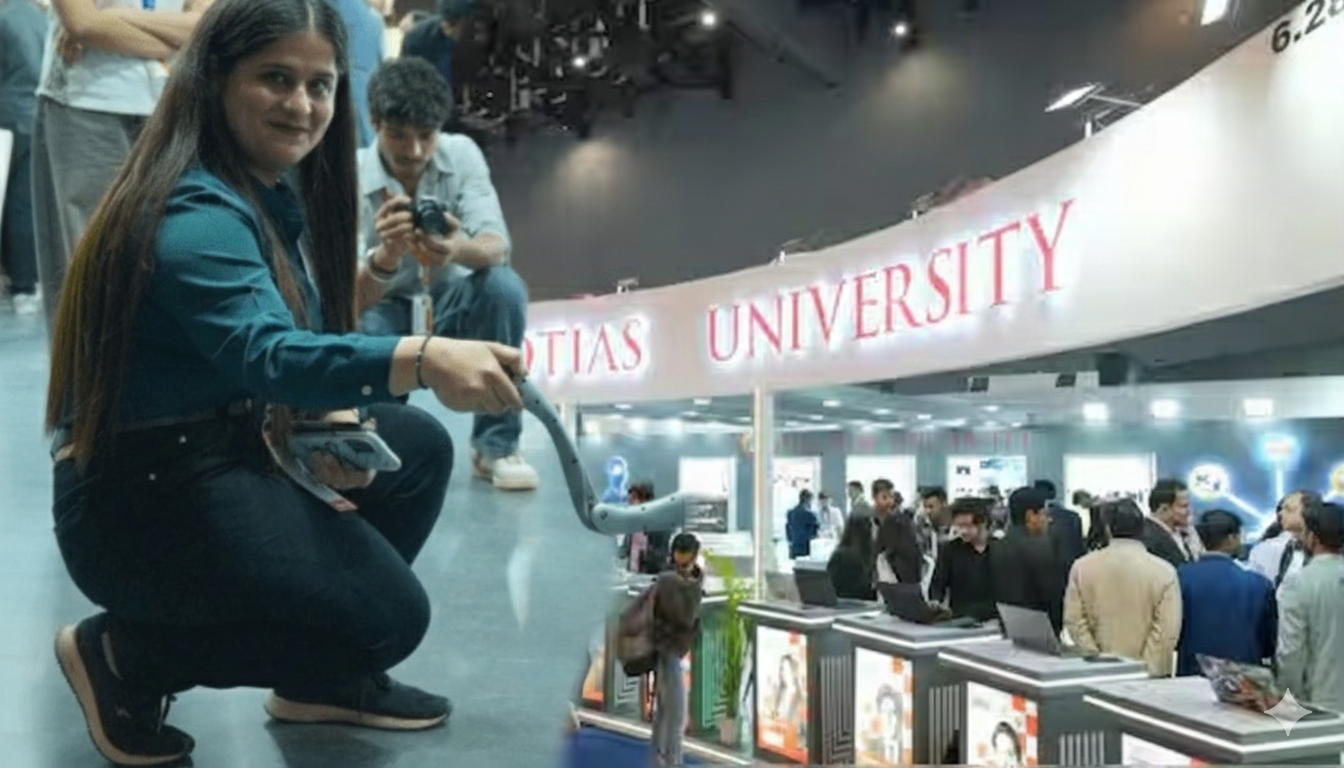
During the student innovation segment of the summit, a team representing Galgotia University presented a quadruped robot—a four-legged "AI Dog"—designed for disaster management and autonomous surveillance. The team, supported by university PR, claimed that the robot’s hardware and the proprietary AI stack controlling its gait and vision were developed within their campus labs. For an afternoon, they were the stars of the summit, symbolizing India's jump into high-end robotics hardware.
However, the skepticism among the tech delegates was instantaneous. In an era of global supply chains, the silhouette of the robot was too familiar. Independent analysts quickly identified the machine as the Go2 model from Unitree Robotics, a leading Chinese robotics firm. The "innovation" was effectively a commercial off-the-shelf purchase. The university had reportedly removed the Unitree logos, replaced them with campus branding, and presented a purchased asset as a researched achievement.
Unitree Robotics and the Verification of Fraud
The controversy transitioned from social media speculation to verified fact when Unitree Robotics, based in Hangzhou, China, released a statement. They confirmed that the unit displayed at the Bharat Mandapam was indeed their Go2 model, a robot widely exported for academic and commercial use. This formal claim by the manufacturer stripped away any plausible deniability. It was not a "collaborative design" or a "licensed adaptation"; it was an out-of-the-box product being used to seek government recognition and academic funding under false pretenses.
Global Precedents: From the Hanxin Chip to the AI Dog
The Galgotia incident is not an isolated case in the history of technological deception. It mirrors the infamous Hanxin Chip Scandal of 2003 in China, where a professor claimed to have developed a high-performance DSP chip, only for it to be revealed that he had simply sandpapered the logo off a Motorola chip and rebranded it as his own. These incidents highlight a dangerous trend where the pressure for "national pride" in technology leads to academic shortcuts that damage a country's long-term credibility.
In the Indian context, this incident highlights a severe gap in hardware R&D. While India excels in software and AI logic, the fabrication of high-torque motors, carbon-fiber chassis, and low-latency joint controllers remains a challenge. By faking hardware progress, institutions demotivate students who are actually working on the difficult, slow, and often "messy" process of building original robots. This fraud is a theft of attention from genuine innovators who are building the future of Viksit Bharat.
The Legal and Ethical Fallout
The Ministry of Electronics and Information Technology (MeitY) has taken a stern view of the incident. Under the Intellectual Property Rights (IPR) framework, presenting another company's patented hardware as an original invention can lead to blacklisting from government grants and potential legal action from the manufacturer. Furthermore, for a university, this is a breach of UGC ethics, which mandates that all research must be original and cited correctly.
- Intellectual Property Theft: Rebranding a patented product without authorization.
- Misleading the State: Presenting false data to government-backed summits to gain prestige.
- Academic Integrity: Violating the core principles of research and development.
Conclusion: The Path to True Atmanirbharta
The Galgotia AI dog controversy is a painful but necessary lesson. True self-reliance (Atmanirbharta) cannot be achieved through white-labeling or "sandpapering" logos. It requires a 10-to-15-year commitment to deep-tech research, failure-friendly funding, and a culture that values original effort over polished optics. As India prepares for the 2047 centenary, the focus must shift from "showing" technology to "building" it from the ground up.
Crack the Rank List with cuet.pro
The world of 2026 requires more than just textbook knowledge; it requires an analytical mind. Master the intersections of technology, ethics, and current affairs with cuet.pro. Our mentors from DU, BHU, and JNU provide the strategy you need to dominate the CUET 2026 Merit List.
Join cuet.pro Today