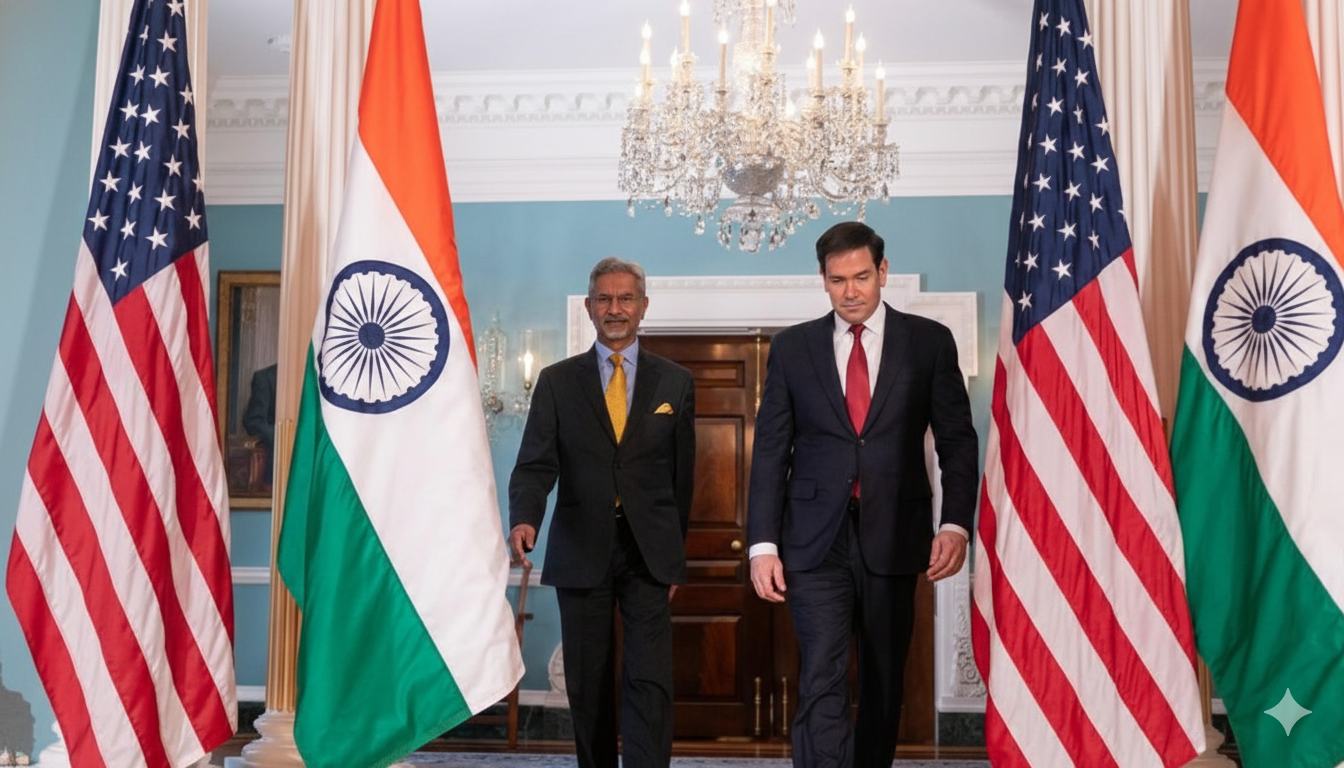
India-US Interim Trade Deal: Explained
Editorial Analysis
The formalization of the interim trade deal between India and the United States in early February 2026 marks a transformative milestone in the bilateral relationship. Moving beyond the tariff-heavy disputes of previous years, this agreement creates a comprehensive roadmap that integrates trade, technology, and supply chain security. It effectively positions India as a primary strategic economic ally for the U.S. in the Indo-Pacific region, providing a stable alternative to volatile global markets.
A central pillar of the 2026 agreement is the reduction of duties on high-value industrial and agricultural goods. In a reciprocal move, Washington has committed to removing the 25 percent duty on Indian steel and 10 percent duty on aluminum, which had been a major point of friction since 2018. This de-escalation is designed to revitalize Indian manufacturing exports while offering American tech and agriculture firms deeper penetration into the burgeoning Indian middle-class market.
From a strategic perspective, the deal acts as a mechanism for de-risking global supply chains. By cementing long-term economic bonds, both nations enhance their autonomy and security against external shocks. The agreement also includes provisions for maritime security and the protection of critical trade routes, ensuring that the economic cooperation is backed by a secure physical environment for the movement of goods.