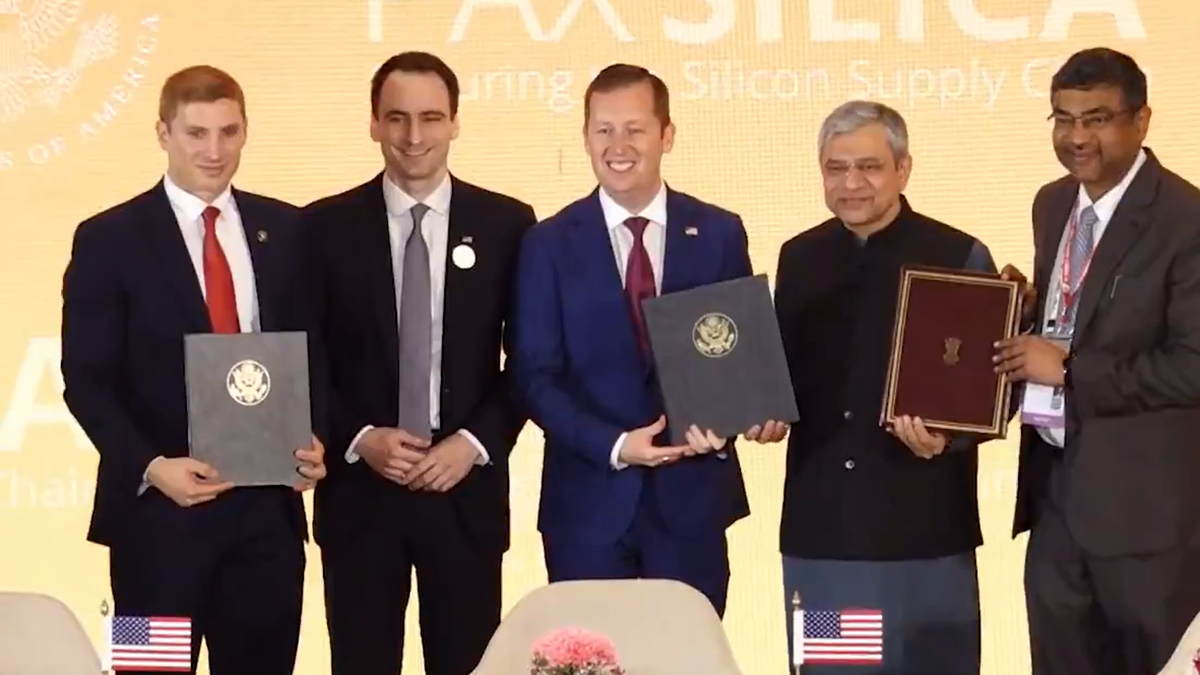
India Joins U.S.-Led Pax Silica Coalition: Explained
Editorial Analysis
On February 20, 2026, during the India AI Impact Summit in New Delhi, India formally joined the Pax Silica coalition, a U.S.-led strategic framework designed to secure the global "silicon stack". This alliance, brokered by the U.S. State Department, represents a fundamental shift in the 21st-century economic and technological order, positioning semiconductors, AI, and critical minerals as the strategic pillars of national security. By signing the Pax Silica Declaration, India has aligned itself with a group of "trusted partners," including Japan, South Korea, and the UAE, to build a resilient and democratically governed supply chain that reduces over-dependence on single-country dominance.
Unlike previous narrow semiconductor pacts, Pax Silica adopts an end-to-end approach to technology sovereignty. The initiative coordinates policy across the entire lifecycle of electronics—from the mining and refining of rare earth elements to the fabrication of advanced chips and the deployment of frontier AI models in global data centers. India’s inclusion is described as "strategic and essential" due to its massive engineering talent pool and its role as a primary demographic hub for AI innovation. For India, this entry is expected to catalyze billions in tech investments, particularly in advanced 2-nanometer chip design and semiconductor fabrication ecosystems.
The formalization of Pax Silica effectively draws a "silicon curtain" across the global digital economy, aiming to prevent economic coercion through weaponized dependencies. For the Indian government, this move signals a pivot from "strategic ambiguity" to a committed partnership with open and democratic societies. While this integration offers unprecedented access to advanced technologies and joint investments, it also requires delicate diplomatic navigation to align India’s domestic industrial policies with the coalition’s free-market ethos. Ultimately, Pax Silica positions India as a central node in a new geopolitical order where computational power is the primary instrument of strategic order-making.