Bharat Bodhan AI Conclave: Explained
Editorial Analysis
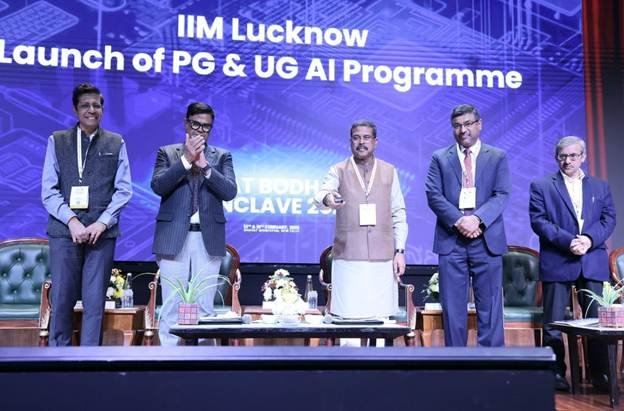
In February 2026, the Ministry of Education unveiled a comprehensive strategic roadmap to integrate advanced Artificial Intelligence (AI) tools into the national teaching framework. Following the conclusions of the Bharat Bodhan AI Conclave, the government has moved from a conceptual stage to a nationwide implementation phase, aiming to enhance the quality of instruction and administrative efficiency across primary and higher education. This plan is not intended to replace teachers but to augment their capabilities through the use of Personalized Learning Paths (PLPs) and AI-driven diagnostic tools.
The core of the plan involves the deployment of the "Anuvadini" engine and the expansion of the National Digital Education Architecture (NDEAR). These tools work by analyzing real-time student performance data to identify specific learning gaps and suggesting tailored remedial content in 22 regional Indian languages. For teachers, the plan introduces AI assistants that automate grading, track attendance, and handle routine administrative queries, thereby allowing educators to focus more on high-order pedagogical tasks and mentorship.
The government has also launched the "Shikshak-AI" training program to ensure that over 10 million educators across India are equipped with the digital literacy required to use these tools effectively. This initiative includes the setting up of specialized AI-Innovation labs in 1,000 select schools and colleges to serve as hubs for research and best practices. By institutionalizing AI in the teaching process, the Ministry aims to create a more inclusive and resilient education system that can adapt to the unique needs of every learner, regardless of their geographical or socio-economic background.