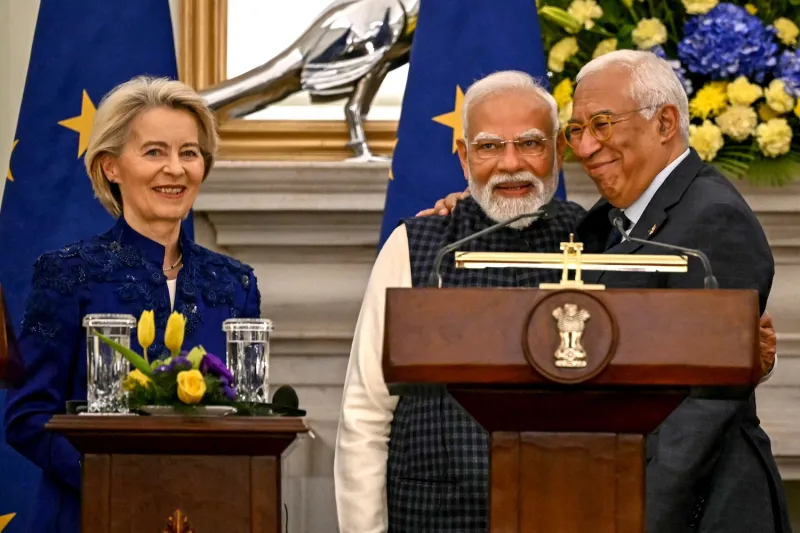
The formal conclusion of the India-EU Free Trade Agreement (FTA) on January 27, 2026, represents a landmark shift in global economic alignments. Negotiated over nearly two decades, this "mother of all deals" eliminates tariffs on over 99 percent of Indian exports by trade value, granting unprecedented access to the European single market. More than a mere commercial pact, the agreement serves as a strategic instrument for both parties to diversify their economic dependencies away from volatile major markets and consolidate a rules-based order in the Indo-Pacific.
Professional Mobility and Talent Corridors
A central pillar of the 2026 agreement is a comprehensive mobility framework designed to facilitate the temporary stay of skilled Indian professionals within the EU. The deal secures market access commitments across 144 services subsectors, including IT, healthcare, and engineering, which are critical for addressing the EU’s growing labor shortages. To support this, a first-of-its-kind "European Legal Gateway Office" will be established in India to streamline visa guidance and professional recognition for Indian students and researchers.
Security and Supply Chain Resilience
Beyond immediate trade benefits, the agreement is anchored by a new India-EU Security and Defence Partnership. This partnership emphasizes maritime security and the protection of critical technologies, ensuring that the economic integration of the two regions is supported by stable trade routes. By reducing duties on high-tech imports and fostering industrial collaboration, the FTA enables both India and the EU to "de-risk" their supply chains, particularly in sensitive sectors like semiconductors and green energy infrastructure.
International Relations Update
Why It Is In The News
India and EU Seal the Deal: Trade & Security Overhaul
As of late January 2026, the India-EU FTA has dominated headlines following a landmark summit where both parties finalized the "mother of all deals". This trending topic has been highlighted by The Indian Express and The Hindu as a definitive end to years of deadlock, signaled by the visit of top EU leaders to New Delhi to ink the final agreement.
The news is particularly focused on three major takeaways: Trade liberalization, Mobility for professionals, and enhanced Security cooperation. Additionally, the agreement’s alignment with the broader India-Arab Foreign Ministers' Meeting and the modernization of global trade norms has positioned it as a central pillar of India's current foreign policy and economic strategy for the 2026-27 fiscal year.
Geopolitical Context
Background & Evolution
The Long Road from 2007
The background of the India-EU FTA is one of persistent effort and strategic patience. Formal negotiations for a Broad-based Trade and Investment Agreement (BTIA) first began in 2007. However, these talks were suspended in 2013 due to fundamental differences over market access for automobiles, spirits, and the movement of professionals—often referred to as "Mode 4" services.
A New Strategic Imperative
The revival of talks in 2021, and the final success in 2026, was driven by a shared strategic imperative. The global geopolitical shift, characterized by the need for secure supply chains and a stable Indo-Pacific, forced both New Delhi and Brussels to view the FTA as more than just a commercial deal. The current 2026 landscape is a result of this transition from a "transactional" relationship to a "transformational" strategic alliance, culminating in the integrated Trade, Mobility, and Security framework we see today.